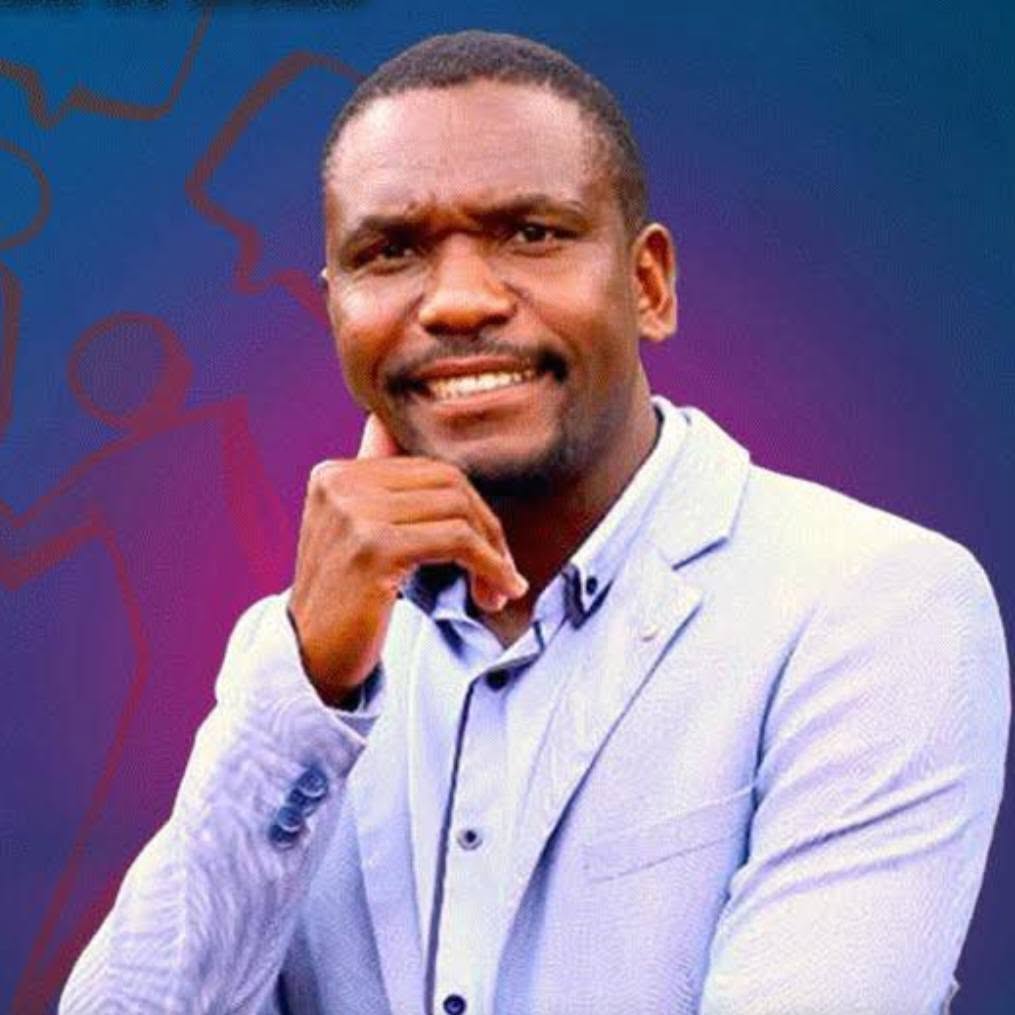
The call came like so many others in Blessed Mhlanga's 25-year journalism career—a tip from a trusted source, a warning that danger was closing in. But this time, the journalist whose name has become synonymous with fearless reporting in Zimbabwe knew the stakes were different.
"I received credible calls from top Zanu PF officials and members of the Central Intelligence who have been my trusted sources for years that there was a plot to kill me if I returned to Zimbabwe," Mhlanga recounts from his temporary refuge in the United Kingdom. "I spoke directly to a police officer (whose name was mentioned as P Mukova), who told me he had instructions to arrest me upon my return to Zimbabwe and oppose my bail."
The 46-year-old journalist never planned to leave his country. His journey into exile began not as a decision, but as a trap set by the very speech he delivered at the United Nations in Geneva on February 15, 2026.
"I did not decide to leave Zimbabwe," Mhlanga insists, his voice carrying the weight of a man who has lost control of his own narrative. "I travelled legitimately to Geneva to attend a UN human rights forum where I spoke on my experience as a prisoner of conscience."
That speech—a testimony about repression and restrictions on media freedom in Zimbabwe—ignited a firestorm of outrage from the government and Zanu PF supporters, who demanded he be arrested and jailed under the Patriotic Act, which carries a maximum sentence of 10 years in prison.
"It was my hope that by the time I finished that work, the noise around my speech would have died down and forgotten," Mhlanga reflects. "Sadly nothing has been forgotten."
The 73 Days That Changed Everything
To understand Mhlanga's current plight, one must understand what he endured before exile. On February 24, 2025, the journalist was arrested for what he describes as "another man's speech at a press conference I did not even attend". The charges? Transmitting data messages "inciting violence or damage to property"—charges stemming from his coverage of interviews with the late war veteran Blessed Geza, who had called for President Emmerson Mnangagwa's resignation.
What followed was 73 days of pre-trial detention that would break most men. Denied bail three times, Mhlanga was held at Harare Remand Prison and Chikurubi Maximum Security Prison, experiencing firsthand the arbitrary justice system he had spent years documenting.
From his prison cell, Mhlanga penned a handwritten statement that revealed the steel beneath his conviction: "Prison is meant to break you. It is meant to change you. I have learnt quite to the contrary. Prison makes you more resolute. I am stronger and I identify more with you ever than before".
But the experience left scars deeper than any physical wound. "If what we have seen is anything to go by, if I am lucky I will be thrown in prison and if unlucky I will be killed," he now says, the calm in his voice belying the terror of his reality.
A Life Interrupted
Today, from the United Kingdom, Mhlanga describes a life that has been shattered in ways he never imagined.
"I have been going through one of the most difficult phases of my life, one where I should make an option of returning to Zimbabwe and risk my freedom and or life, or stay here and plan to start afresh," he says. "Leave 46 years worth of a life, my law studies, my job and my family to save myself the pain."
The loneliness is crushing. "I have had sleepless nights because here I have no control of my surroundings, control of what is going to happen to me or how I will survive," he admits. "It's lonely as I battle with my thoughts and without a future to look forward to. I am in shock and my mental health has been greatly compromised. I don't wish this for anyone."
The impact on his work as a journalist has been profound. "I have been unable to do my podcasts which in my view were needed during this CAB3 moment in Zimbabwe," he says. "I have been thrown into self-censorship and have been completely disempowered."
Threats That Follow Beyond Borders
The persecution Mhlanga faces is not abstract—it follows him even in exile.
Presidential spokesperson George Charamba threatened his children on social media, saying Mhlanga's speaking out endangered them. "To this day I fear for my children," he says quietly.
President Emmerson Mnangagwa himself made a speech that directly threatened him days after his Geneva address, while Zanu PF trolls posted on X that Mhlanga should be put on a firing squad and be killed.
"These are very powerful and influential men in Zimbabwean politics and are reported to have control of the judiciary and police. I am therefore really afraid of the consequences that might befall me," Mhlanga says.
His case has been brought to the United Nations Special Rapporteur on Human Rights, but he still awaits a response.
Meanwhile, a warrant of arrest has been issued against him, and his employer, Alpha Media Holdings (AMH), is most likely to lose property worth USD 200,000 because of his inability to return to Zimbabwe to face a case that has already dragged on for two years.
A Journalist's Heart
Before the Geneva speech that changed everything, Mhlanga was working on a documentary about how young girls are being affected by corruption in the education sector. He had also just been appointed Digital Editor and Head of Broadcasting at AMH—"an opportunity I relished."
Now, he paints a grim picture of journalism in Zimbabwe. "I prefer to call it public interest journalism—I am afraid to say it is dying because of two ills: fear and economy," he explains.
"Poorly paid journalists are working for survival, so most of the stories we get are paid hatchet jobs or public relations pieces, and that breaks my heart," he says. "Other journalists are now playing it safe. The fear of arrest and being thrown in prison scares many of us now. There is now self-censorship, and the real stories are now not being told, at least not from inside Zimbabwe."
Mhlanga names colleagues who have paid the price: a journalist from Bulawayo 24 who spent three months in prison, Faith Zaba arrested and held for three nights, Hopewell Chin'ono who has since migrated to South Africa, Frank Chikoore now in Australia. "The regime's appetite to persecute journalists is legendary," he says.
"Colleagues tell me that they don't want to be like me, so they now stay clear from any story that could anger the regime, especially around corruption," he adds.
The Longing for Home
Despite everything, Mhlanga's thoughts remain fixed on the country he left behind and the family he misses desperately.
"If I get a guarantee from government that I will be protected and will receive a fair trial without pre-trial detention, I would be back home in less than 24 hours," he says with raw emotion. "I miss my children."
His message to journalists still working inside Zimbabwe carries the weight of someone who has sacrificed everything for his profession: "In the absence of information, the people are enslaved. You are doing a wonderful job, please hold fort."
And to the international community, his plea is urgent: "Zimbabwe has been colonised by its own leaders, and the people are suffering under the Mnangagwa regime. The world has to act to save journalists, teachers, parents, nurses and patients from the vice of dictatorship unfolding in our country."
As for recommendations to the current administration, Mhlanga offers no hope. "They have no desire to see a free media in Zimbabwe. There is no need to waste energy giving them any recommendations," he says bluntly. "CAB3 has demonstrated how this government does not want free speech to be part of the Zimbabwean vocabulary. My recommendations are therefore best kept for the next government—if it comes during my lifetime."
For now, the man who once said from his prison cell that "unjust law is no law" sits in an unfamiliar country, processing trauma, rebuilding a life from fragments, and waiting. Waiting for a guarantee that will allow him to return home. Waiting for justice in a country where he fears it may never come.
"Ultimately the people choose who governs them, and for people to survive they need hope," Mhlanga says. "It is sad however for me to point out that without access to quality information through a credible media and a judiciary that cares for law, it will be a long time coming."
He pauses, reflecting on what his years as a journalist have shown him: "From what I have seen as a journalist and talking to the people, they don't have hope that their vote will have capacity to change anything in Zimbabwe—and this is dangerous. Even those in Zanu PF now look to a coup for change. I fear for the worst, but I hope for the best."
It is the testimony of a man who has lost his country but refuses to lose his voice—a journalist in exile, a father separated from his children, a truth-teller who will not be silenced, no matter the cost.