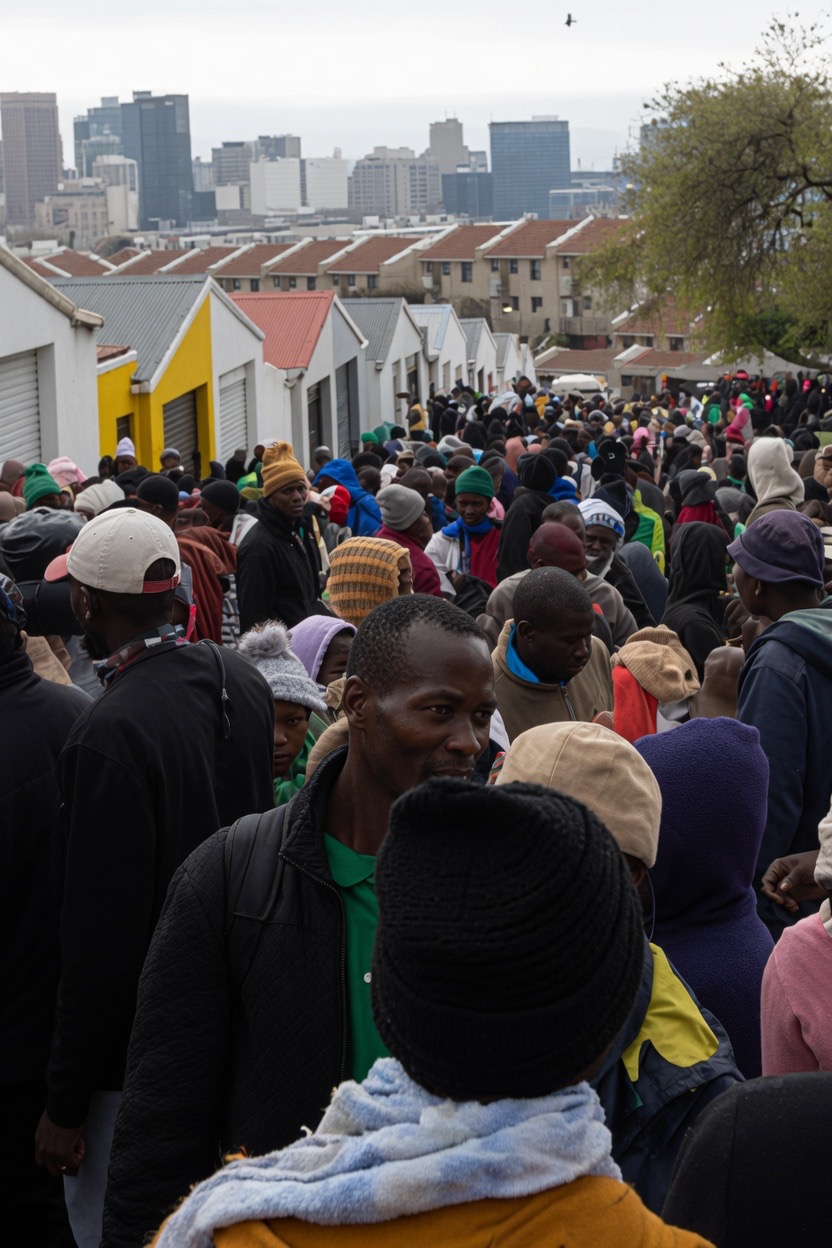
JOHANNESBURG — Hundreds of Zimbabweans camped on pavements outside their country’s consulate in Cape Town on Friday, joining thousands of other African migrants fleeing South Africa amid a surge in xenophobic attacks and threats of further violence ahead of a June 30 deadline set by anti-immigrant activists.
The migrants, many of whom have lived and worked in South Africa for years, described destroyed homes and businesses, physical assaults, and widespread fear as vigilante groups target foreign nationals, particularly from Zimbabwe, Malawi, Nigeria, and other African countries.
Some slept outdoors in winter conditions while awaiting repatriation buses organized by their home governments.
“We just want to go home,” said one Zimbabwean woman waiting outside the consulate. “Everyone just wants to go home.” Many acknowledged the economic hardships awaiting them in Zimbabwe but said staying in South Africa had become untenable.
The current wave of unrest echoes previous outbreaks of xenophobic violence in South Africa, where foreigners are often scapegoated for high unemployment, crime, and strained public services in impoverished townships.
Recent attacks have included looting of foreign-owned shops and assaults in areas such as Durban and parts of Gauteng.
Human Rights Watch has documented vigilante actions targeting African and Asian nationals.
Neighboring countries have stepped up repatriation efforts.
Zimbabwe, Malawi, Nigeria, Ghana, and Mozambique have arranged transport for citizens seeking to leave, with some governments criticizing the climate of fear in South Africa.
President Cyril Ramaphosa has condemned the violence and warned against vigilantism.
In a televised address earlier this month, he vowed to crack down on groups “exploiting the concerns of our people about illegal immigration to further their own political, personal and criminal agendas.”
“We will and must not allow groups to use the legitimate concerns of South Africans to destabilize our country through inciting lawlessness and violence,” Ramaphosa said.
Foreign Minister Ronald Lamola has reiterated that immigration enforcement is the responsibility of the state, not civilians, and emphasized that attacks on foreign nationals constitute
Government officials have described South Africa as a welcoming nation and attributed some incidents to general criminality rather than organized xenophobia, while promising stronger social cohesion programs and migration management.
Critics, however, argue the response has been insufficient, pointing to limited arrests following past attacks and occasional political rhetoric that fuels tensions.
Human rights groups and affected communities say prevention remains weak despite repeated government pledges.
Zimbabwean opposition leader Nelson Chamisa has strongly condemned the attacks.
In earlier statements, he described the violence as “deeply regrettable and wholly unacceptable,” while calling for urgent SADC intervention and greater African solidarity.
In a post on X today, Chamisa added: “THIS IS TRULY HEARTBREAKING 💔 We must act urgently to support our fellow Zimbabwean nationals during this difficult time. Silence and inaction are not options. Now is the time for diplomatic efforts, compassion, solidarity, and decisive action.”
As the June 30 deadline approaches, tensions remain high in several cities, with fears of escalated protests or violence.
Zimbabwean and other migrant communities continue to seek safe passage home, underscoring long-standing challenges in regional migration and integration in southern Africa.