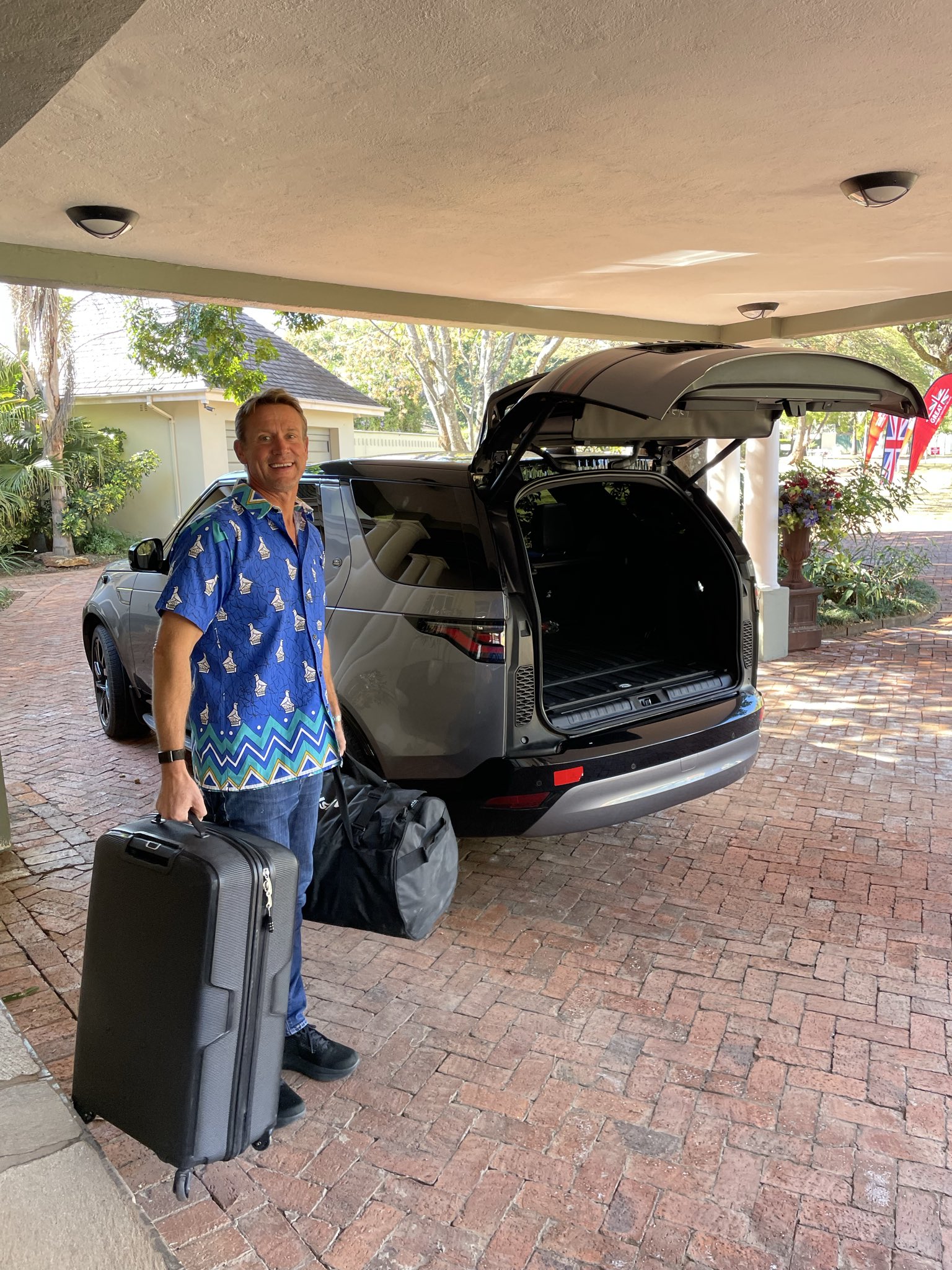
HARARE - In the early 1990s, a young British teacher named Pete Vowles stepped off a plane into the red soils of rural Mudzi, Zimbabwe. Fresh from his schooling in the UK, he had taken a posting with Zimbabwe’s Ministry of Education to teach English and maths at Chifamba Secondary School in Suswe, Mashonaland East. It was meant to be a year of adventure. Instead, it became the defining chapter of his life.
Living simply among communities with limited resources, Vowles experienced a culture shock that reshaped his worldview.
He learned that what truly mattered was not possessions or status but relationships, family, resilience and shared humanity.
He embraced the warmth of Zimbabwean people, the rhythms of sungura music, the taste of sadza eaten with his hands and the deep sense of community.
Those years in Mudzi, followed by time in Murehwa, Harare and Bulawayo, planted roots that would last decades.
He even returned for his honeymoon in 2003, taking his wife Hannah to Harare, Hippo Pools and the Eastern Highlands.
In October 2023, Vowles returned to Zimbabwe as His Majesty’s Ambassador.
A seasoned diplomat with experience across Africa, Asia and the Foreign, Commonwealth and Development Office, he said the posting was personal.
“There’s probably nowhere else in the world where I will ever be posted where I care so much about the relationship,” he reflected.
His mission was to build on thawing relations and focus on practical partnership in trade, investment, development, culture, sport and people to people ties.
During his three year tenure, Vowles became known for taking the UK’s presence “beyond Harare.” He championed pop-up embassies to reach communities directly.
The UK continued support for demining, with nearly $33 million committed in recent years, along with aid to smallholder farmers, youth entrepreneurship, education exchanges and economic opportunities.
He engaged across the political spectrum, business community and civil society with humility and optimism, grounded by memories of his younger self living in rural growth points.
What set him apart was his connection with ordinary Zimbabweans.
He attended community events, celebrated local culture, supported cricket and football initiatives like the Unity Cup, and spoke openly about shared passions from Arsenal fans to remittances and UK-educated Zimbabweans.
Many Zimbabweans called him genuine and approachable.
Tributes from diaspora groups like ZDCN-UK praised his role in rebuilding trust through dialogue, sport, youth programs and mutual respect.
In farewell visits in mid-2026, Vowles thanked President Emmerson Mnangagwa and the people of Zimbabwe.
He highlighted improved bilateral ties, Zimbabwe’s seat on the UN Security Council and the enduring connections between the two nations.
As he hosted the King’s Birthday Party for the last time and prepared to depart, the “homeboy” diplomat left with a lasting legacy.
Pete Vowles’ story is more than diplomacy. It shows that the strongest bridges are built on personal transformation, genuine curiosity and the simple act of showing up.
From a young teacher in Mudzi to ambassador, he never stopped learning from Zimbabwe or believing in its potential.
As he returns to the UK, his heart, as many have noted, remains partly in Zimbabwe.
In Harare, Bulawayo, Mudzi and beyond, many will remember the ambassador who came back not just to represent his country, but to reconnect with a place that had long felt like home.
Go well, sahwira. Until next time.