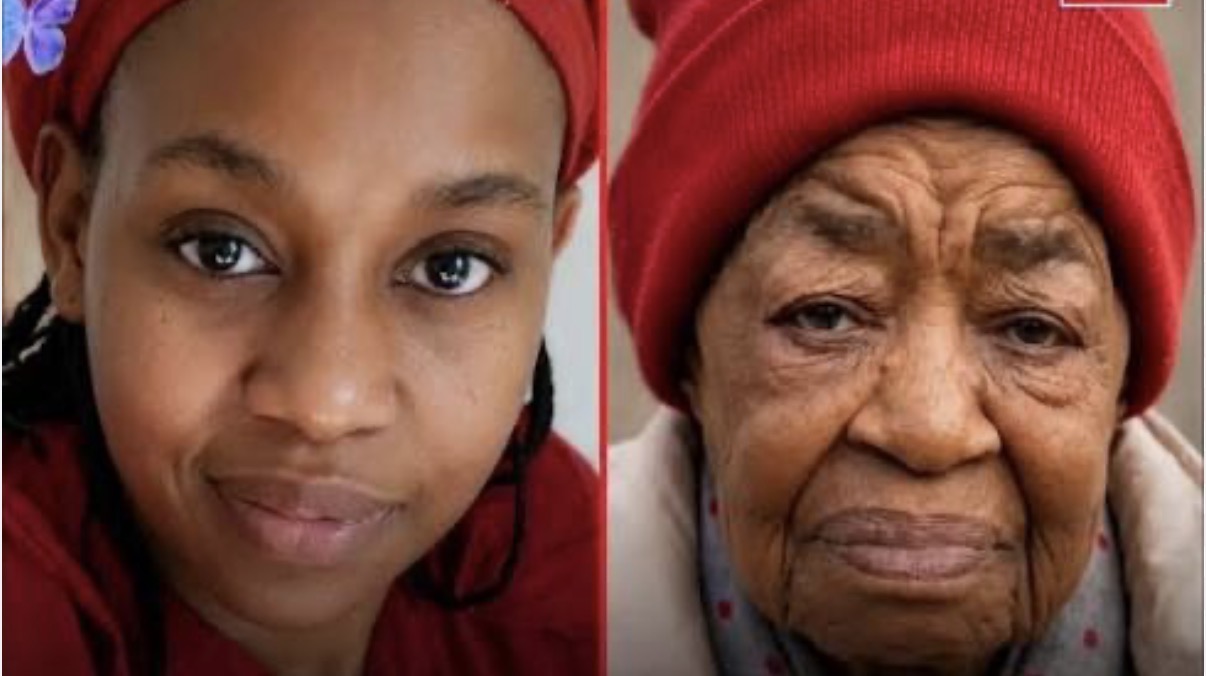
Johannesburg — When Snenhlanhla Mthethwa first noticed her hair greying at 22, she thought it was stress. By 25, her skin had thinned, her voice had changed, and her joints ached like her grandmother’s. Doctors at Chris Hani Baragwanath Hospital gave her a diagnosis she’d never heard of: Werner syndrome.
“It’s a rare genetic condition,” her physician explained. “It causes premature aging. It’s not contagious. It’s not caused by anything you did. You inherited a faulty copy of the WRN gene from both your parents.”
Snenhlanhla, now 28, went home, told her family, and tried to get on with her life. But her story didn’t stay private for long.
Last month, a clip of Snenhlanhla speaking at a community health workshop was reposted by an anti-immigrant Facebook page with over 40,000 followers.
The caption read: “SA woman AGES 50 YEARS OVERNIGHT after sleeping with a Nigerian man. This is what they bring here!”
Within days, WhatsApp voice notes were circulating in Gauteng townships. Some claimed “foreigners carry diseases that make our women old.”
Others said Snenhlanhla was being “punished” for dating a man from Mozambique. A small protest even formed outside her aunt’s home in Soweto, with placards reading “Protect Our Sisters”.
Snenhlanhla was stunned. “I have never dated a foreign national,” she said. “Not that it would matter if I had. You don’t catch Werner syndrome from a person. You’re born with it.”
Werner syndrome is an autosomal recessive disorder. It affects about 1 in 200,000 people worldwide. It occurs when a child inherits two mutated copies of the WRN gene — one from each parent.
It has nothing to do with nationality, intimacy, or immigration. The Department of Health and the Genetic Counselling Division at Wits University both released statements confirming this after the posts went viral.
But the misinformation moved faster than the facts.
“I got messages from people I went to school with asking if it’s true,” Snenhlanhla said. “One cousin told my mother to take me to a prophet to ‘cleanse’ me. The shame they tried to put on me was worse than the disease.”
Instead of hiding, she recorded a video from her bedroom. No makeup, no filter. She held up her hospital file and her genetic test results.
“My name is Snenhlanhla Mthethwa. I am South African. My parents are South African. I have Werner syndrome. It is in my DNA. It is not in my boyfriend’s passport — because I don’t even have a boyfriend,” she said, laughing. “Stop using my illness to spread hate. Stop using foreign nationals as your scapegoat for everything you don’t understand.”
The video was shared by the Rare Diseases South Africa network and has since been viewed over 300,000 times. Dr. Helen Malherbe, a clinical geneticist, stitched Snenhlanhla’s video to add: “Werner syndrome is not infectious. Blaming migrants for genetic conditions is not just wrong — it delays real care and spreads stigma.”
The original page that posted the hoax has since deleted it, but no apology was issued.
Snenhlanhla now volunteers with a support group for young people with progeroid syndromes. “People fear what they don’t understand,” she said. “But if my face can teach one person that genes don’t check your ID book, then maybe this was worth it.”
She’s applying for funding to start a podcast on rare diseases in isiZulu and Sesotho. “The science exists,” she said. “Now we need to translate it — before someone else’s truth gets twisted.”
---
Note: Werner syndrome is a real, extremely rare genetic disorder causing premature aging. It cannot be transmitted through contact, intimacy, or migration.